
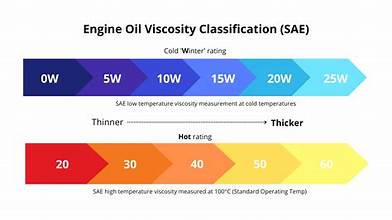
The term “viscosity” refers to the thickness of the oil and its resistance to flow. A higher oil viscosity number indicates a thicker oil.

The five and 10 digits refer to the viscosity at cooler temperatures. So, that means when you are comparing 5w30 vs. 10w30, the thinner 5w30 will circulate quicker, and flow through bearing tolerances better during an engine startup in the winter or colder climates. The “w” behind the five and the 10 indicates that those are the viscosities in colder or winter temperatures. The viscosity of the winter number is tested at 0 degrees Fahrenheit. The 30 refers to the viscosity at higher temperatures. This indicates that the oil is thicker at higher temperatures, so it adheres to the metal parts of the engine, protecting them as they operate. This number is tested at 212 degrees Fahrenheit. The viscosity number is the result of the Society of Automotive Engineers (SAE) determining how fast the oil will flow through a certain size tube.
When comparing 5w20 vs. 5w30 motor oil, the 20 indicates that the oil has a lower viscosity and is thinner at higher temperatures. This enables the 5w20 motor oil to reach engine parts quicker and create less drag that reduces fuel economy. So, due to viscosity, 5w20 is a thinner oil during operating temperatures, whereas 5w30 is thicker during operating temperatures. A majority of manufacturers are now producing engines that operate on 5w20 oil, to which it’s important to stick to this viscosity and not substitute 5w30.


 nextgencarexperts.car.blog
Leave a comment