
The steering wheel turns a pinion gear, which moves a rack back and forth to steer the wheels. This mechanism converts the circular motion of the steering wheel to linear motion, which is applied to the wheels of the car via tie rods and a steering knuckle.
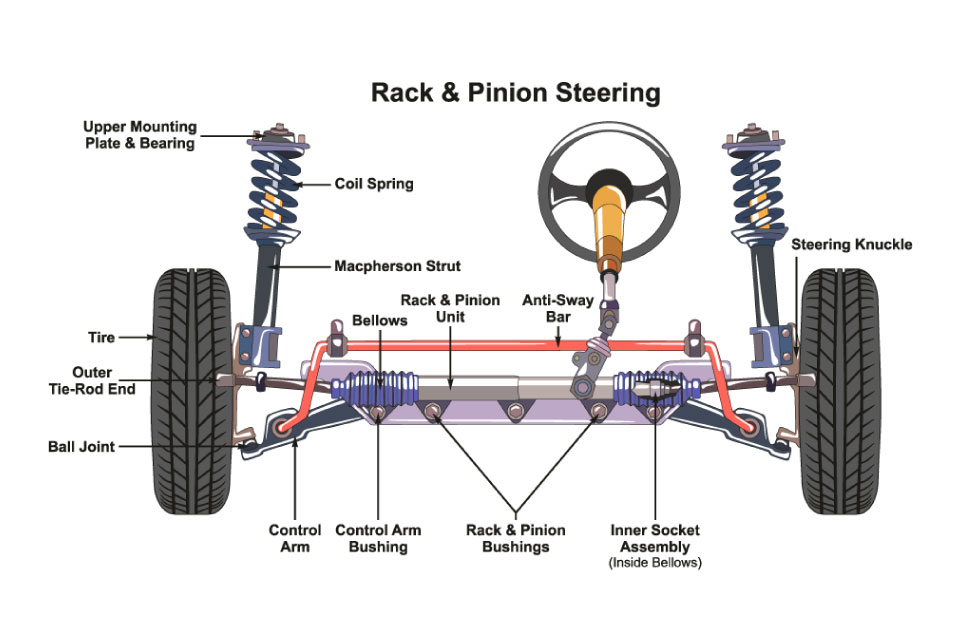
Mechanical steering (Rack and pinion)
The steering system functions to move the automobile’s wheels in response to the movement of the steering wheel. The diagram above depicts the basic components of a mechanical steering system.
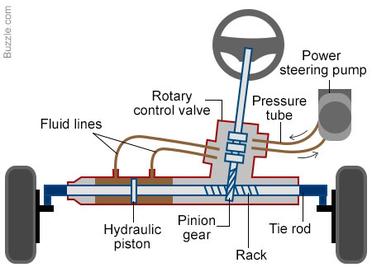
Hydraulic power steering system
It uses fluid to increase the force a driver uses to steer a car. When the steering wheel is turned, the engine drives a pump that sends high-pressure hydraulic oil through tubes to a cylinder with a piston. The oil increases the force of the piston, which then moves from one end to the other, multiplying the force of the driver’s steering. This boost is then sent to the gears that move the car’s front wheels.
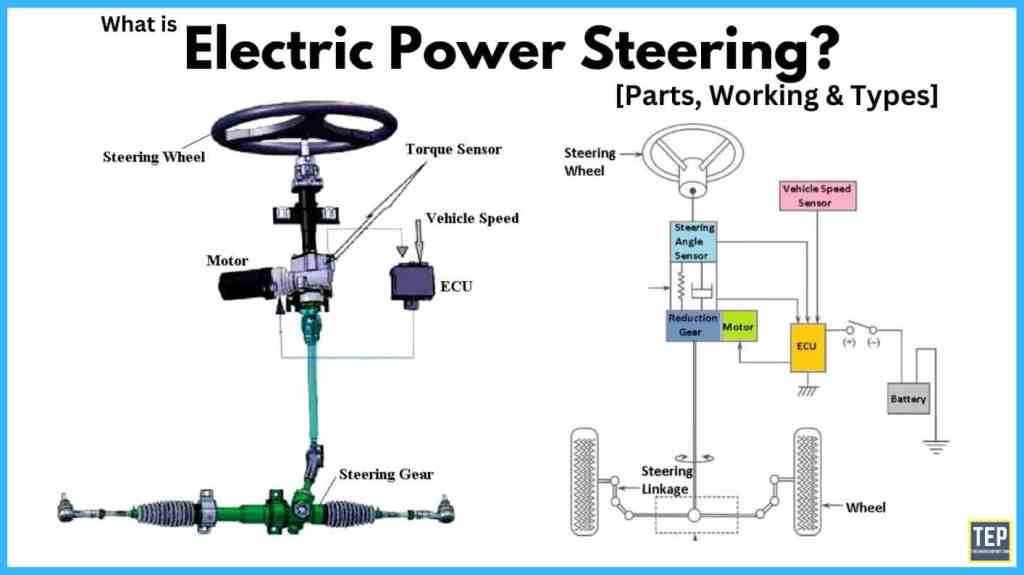
Now the every car comes with EPS (electric power steering) variants meet the requirements for small, mid-range, sports cars as well as light commercial vehicles. The EPS has an electric motor which controls the vehicle steering. With an electric motor the EPS controls and assists vehicle steering and provides an optimal and enjoying steering feel.
Hardware and software are developed concurrently and work seamlessly together to connect the driver with the road – enabling advanced safety and performance along with precise, predictable feel of the road.

 nextgencarexperts.car.blog
Leave a comment